Tuesday, November 28, 2023

Decorating with Greens


Annette MaCoy, Penn State Master Gardener, shared tips for decorating with greens in December, 2014.

One of our nicest winter holiday traditions is decorating with fresh greenery. Evergreens such as cedar, ivy, pine and holly add a natural look and fresh fragrance to our homes; for many, they represent life everlasting and the coming renewal of spring. Your own landscape is a great place to look for holiday greenery. You may have a variety of materials unavailable at a store, and what you gather will be much fresher. Just remember that you are actually pruning the plants as you gather greenery, so consider carefully which branches you can trim to preserve the natural form of the tree or shrub.

Properly conditioned greens will last for quite a while in arrangements.

  • Immerse entire evergreen branch in warm water for 12 hours or overnight. This will prolong the life of the branch and also clean the foliage.
  • Remove all lower leaves to ensure that there is no soft material below the water level where it can rot and form bacteria.
  • Re-cut the stem ends at an angle to provide a large surface area for the maximum absorption of water.
  • Stand all branches in water in a cool, dark place until ready to use.
  • Change the water every 2-3 days. A few drops of bleach may be added to the water to prevent bacteria formation.

Check your decorations often, replacing any that become dry, and keep them away from heat sources and out of direct sunlight. Some popular decorating materials have toxic berries or leaves, so keep holiday decorations out of the reach of children and pets.

Magnolia leaves-an elegant touch

Some greens are better for decorating than others. Here are some suggestions from Macoy. Needled and broadleaf evergreens include white pine, juniper, Douglas fir, cedar, fir, spruce, ivy, holly, mountain laurel, boxwood, evergreen magnolia, arborvitae, evergreen viburnum, Leyland cypress, nandina, Japanese cedar, hemlock, and false cypress.

Other plant parts such as berries, dried flowers, cones, seed pods, and twigs add color and texture to holiday arrangements. Some possibilities are acorns, bittersweet, holly berries, hydrangea blossoms, magnolia pods, nandina berries, pine cones, pyracantha berries, rose hips, sweet gum balls, bayberry, redtwig dogwood, and fruits such as lemons, limes, crabapples, seckel pears, kumquats, and pineapple.  Milkweed pods make excellent additions to wreaths or arrangements and can be painted gold, silver or other colors for accent.


[Editor Note: Remember that you can embellish or create decorations any time of the year with many of these greens and other plant parts.] 

CKagan, Master Gardener/AMaCoy, Master Gardener

                                                            ~     ~     ~                              

                       HERB SAMPLER Second Edition

Buy one for yourself and consider getting a few more as the winter holidays approach – hostess gifts, housewarming and holiday presents.


The Second Edition Herb Sampler (2019) is available through Amazon. 

Just click this link to find it. 


Tuesday, November 21, 2023

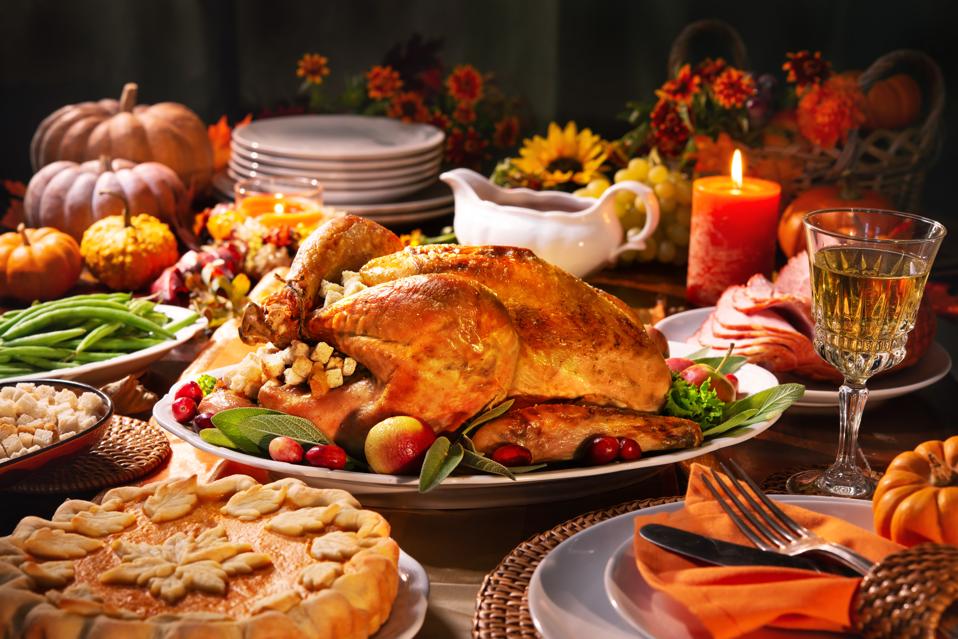
Area Immigrants Blend Holiday Traditions at Thanksgiving (2007)

I start this post letting my readers know that I wrote this in November, 2007, as one of my final Journalism assignments at University of Maryland. Here’s my grade: Grade: 49.50/50 - Excellent

By Carol Kagan

Gustavo Porto Moreira, the little Indian on stage, was so excited to be in the Thanksgiving play that he did "whoop-whoop-whoop" from his one-line cue to the absolute end of the play. His brother, Bernardo, portrayed a pilgrim coming to America by boat, complete with the wide-brimmed black hat and buckle.

In 2000, the boys themselves came to this country from Brazil with their parents and are now participating in the American Thanksgiving tradition. In addition to parades, football games and shopping, immigrants like the Porto Moreiras use the time-honored Thanksgiving meal as another way to integrate with their adopted country.

Thanksgiving is a unique American holiday based on the immigrant experience of the Pilgrims and early colonists. Immigrants in the Washington area use it as an opportunity to blend home-country traditions and foods with American ones.

Thanksgiving is the "ultimate immigrant holiday," said Alice Julier, president of the Association for the Study of Food and Culture. "Thanksgiving is the number one national holiday in the United States and participating provides a sense of national belonging. It's a way to participate in the national identity and yet retain the cultural identity, too."

Brazilian Yuka

The Porto Moreira family's traditional Brazilian Christmas dinner features turkey or ham as the main course and includes yuka, the flour of the cassava plant fried with garlic and onions. For Thanksgiving in the U.S., they visit Brazilian friends where the meal includes turkey, corn pudding and sweet potatoes with marshmallows.

"Brazilians usually want to do whatever the day calls for," said Stella Porto. "If it's Thanksgiving, we'll do turkey." However, Porto's husband and chief family cook, Wayne Moreira, often prepares yuka on request for the holiday meal.

The Thursday celebration of Thanksgiving is a challenge for Meena Bipat, a native of Trinidad who came to the U.S. 17 years ago. Bipat, a Hindu whose personal fast day is Thursday, serves a vegetarian meal on Thanksgiving that includes potatoes and rice. 

Bipat said her son, Dylan, told his class last year that he had "turkeycake" for Thanksgiving. Bipat said she asked him why he made up that story. "He said he didn't want to be different from the other kids." This year on the Sunday after Thanksgiving, the family had a meal which included more American dishes, serving roast chicken, potatoes, gravy, and stuffing in addition to rice and other vegetarian dishes.

For many families the preparation of the meal is part of the holiday tradition. Traditional foods usually take more time to prepare, and the holiday allows people to spend more time in the kitchen.

Xalwa, sweet cake w/ butter & lots of sugar

"Thanksgiving is a day we can get together because everyone is off work," said Amal Kassim, a Somalia native who came to the U.S. in 1984. "During the year we don't have time to spend in the kitchen to do the baking and cooking of the traditional foods."

On Thanksgiving Day, Kassim's family prepares traditional Somalian foods and American foods, a mixture of what everybody likes. "We have married Americans and we share our traditional foods with them and have the American ones, too," Kassim said. Some of the Somalian foods include seasoned rice, salads, and special desserts such as xalwa, a sweet cake made of butter and lots of sugar. Some of the American foods include roast chicken with potatoes and gravy.  The gathering is also a time when the younger children can learn about Somalian traditions and culture.

"Thanksgiving has always been a ritual where immigrants have combined local, native American foods with those from the Old World," said Warren Belasco, a professor of American Studies at the University of Maryland Baltimore County. "Thus, the so-called Pilgrims ate turkey not so much because the Indians ate it but because turkey was already popular back in England."

Bashmeel, Egyptian macaroni dish

Sawsan Said (Sy-ed), who came to the U.S. from Egypt 24 years ago, also mentioned the time commitment to make many of the traditional meals. "Most of the year we don't have time to make special dishes," Said commented. She also celebrates Eid al-Fitr, where the main feast food is traditionally seafood, a food that is avoided during the fast. Other feast dishes include stuffed vegetables, and bashmeel, a macaroni dish with sauce and mashed potatoes.

Said's family enjoys the traditional turkey, gravy, and mashed potatoes at Thanksgiving. "It's the gathering more than what we are eating that is the celebration," Said commented. On occasions when her family is invited out for the holiday, Said may make an Egyptian dish of bashmeel or a mashed potato recipe on a large tray.

Robert Tipple, who came here from Canada five years ago, enjoys the traditional turkey along with parsnips and cauliflower, vegetables he remembers having at Christmas dinners since he was young. One holiday food tradition Tipple misses is Christmas pudding, brought to the table with a liquor fueled flame.

In addition to immigrant families blending American and home-country foods, finding foods and traditions from other cultures can make Thanksgiving a more diverse holiday. Six-year-old Gustavo and eight-year-old Bernardo Porto Moreira are at the ages where a flaming dessert would be fun.

Christmas pudding
- 30 –

Interviewed in person:
Ms. Meena Bipat (Trinidad) 301-985-7710
Ms. Amal Kassim (Somalia) 240-582-2801
Dr. Robert Tipple (Great Britain/Canada) 240-582-2824
Dr. Stella Porto (Brazil) 301-985-7592
Ms. Sawsan Said  (Egypt) 301-985-7825, (With use of the last name for attribution I had to find other words instead of "said".)
 
Experts contacted:
Ms. Alice Julier 413-582-3512, President of the Association for the Study of Food and Culture
Lecturer, Smith College - (I spoke to her by phone.)
Dr. Warren Belasco 410-455-2154, Professor of American Studies, University of Maryland Baltimore County - (He responded with comments on the article by e-mail.)

~    ~     ~     ~

                                              HERB SAMPLER Second Edition

Buy one for yourself and consider getting a few more as the winter holidays approach – hostess gifts, housewarming and holiday presents.


The Second Edition Herb Sampler (2019) is available through Amazon. 

Just click this link to find it. 

Saturday, November 18, 2023

2023 USDA Plant Hardiness Zone Map

 Please note that there are updates on this map due to climate change.

Franklin County, PA is now solidly in Zone 7a

~     ~     ~     ~ 

                                       HERB SAMPLER Second Edition

Buy one for yourself and consider getting a few more as the winter holidays approach – hostess gifts, housewarming and holiday presents.

The Second Edition Herb Sampler (2019) is available through Amazon. 

Just click this link to find it. 


Wednesday, November 15, 2023

Witch Hazel – Notable Native Herb


Red cultivar (Photo: Nancy Miller)

Witch Hazel

One of the Notable Native Herbs (NNH) for 2020 was Witch hazel (Hamamelis virginiana). Notable Native Herb™ is the signature program of Herb Society of America’s (HSA) Native Herb Conservation committee.

The HSA chooses one or two Notable Native Plants every year. Their definition of a native herb refers "to mostly seed-bearing, generally fleshy annuals, biennials, and perennials, aromatic or useful shrubs, vines, and trees that grew naturally in this country, without the influence, accidental or intentional, of man, prior to European settlement." Spring Beauty (Claytonia virginica) was also chosen as an NNH for 2020.


Yellow fringe flowers
(Photo:R.McOnegal. CC BY-NC 4.0 4.0)

The outstanding feature of Witch hazel, also called winter bloom, is the bright yellow flowers with spidery petals that appear in September and last until November just as fall foliage is fading. The flowers have a sweet, slightly spicy scent. The lettuce-green deciduous leaves turn brilliant gold in fall. The open crown has large, crooked, spreading branches that provide winter interest to the landscape.

Witch hazel is native and grows in the USDA Plant Hardiness Zones 3-9 and this species is found most often in the Eastern U.S. It prefers moist but well-drained soil that is slightly acidic. It will grow in full or part sun and can grow as tall as 20 feet. It has thin, smooth, gray bark and shallow roots. The yellow and orange autumn leaves add to the landscape. There are many cultivars with a variety of colors sold as garden shrubs that are grown from hybrids of non-native species.


Autumn Leaves on Witch Hazel
(Photo: Nancy Miller)


The fruit is a woody capsule containing two seeds but this species has low fruit set. When available they are eaten by ruffed grouse, northern bobwhite and ring-necked pheasant. White-tailed deer will browse twigs and foliage. They are pollinated by bees and small flies.


Shivering Moths   (Family Noctuidae)

Courtesy Maryland Biodiversity Project
 - John Glaser

A Scientific American article describes Witch Hazel as being pollinated by a few species of owlet moths, also known as shivering moths. These moths are active during winter. During the moths rest, their body temperature drops to near freezing as they enter a state of torpor. At night, however, these moths become active by shivering, a process which raises their body temperature as much as 50 degrees, enabling them to activate their flight muscles. While they typically feed on sap, they have been observed feeding on flowers.


Native Americans considered this plant magical since it defied nature, blooming when other plants are going dormant for the winter. The witch in the name refers to an old Saxon word-wych-for bend. Forked branches from this tree were used as diving rods said to bend down to locate underground water. In the United States, the aromatic extract of leaves, twigs, and bark is used as an ingredient for topical applications such as skin toners, but individual products are not approved as drugs.


CKagan, Master Gardener

Friday, November 10, 2023

I Write - Hiraeth (Hi er ayth)

UPDATE: This story ran in the Dundalk Eagle Opinion section of May 1, 2025. It was shared on Facebook and I received a number of comments of thanks and a few memories from others - "the smell of wet snow mittens drying on the radiator."

#     #     #     #     #

At our monthly Writing is Fun meetings we decide a prompt for writing for the next meeting. Length is set at 2 pages so we can read them at the meeting. There is quite a diversity of writing. Some are real life recollections, some fictional vignettes, and sometimes there's a poem.


Bethlehem Steel mills and housing (mid right)

The prompt for December 2023 was Something you can never do again. Here's what I wrote.

Hiraeth (Hi er ayth)– Carol Kagan

In the mid-20th century, Bethlehem Steel’s Sparrows Point plant was the world’s largest steel mill, positioned at a deep tidewater area of the Patapsco River, a tributary of Chesapeake Bay.


Coming in the main road you passed the Bungalows where some of the workers lived. As the road curved left, the monstrous black furnaces loomed in the sky ahead while long gray buildings and train tracks lined the roadside. Once you approached town, Dr. Farber’s big house and offices opened the way down “D” Street, lined with stores, churches, and schools. Lettered and numbered streets were laid in neat grid with a variety of houses on the streets beyond. This company town was a planned community providing everything the workers might need to stay close to work. This place was my home for thirteen years. So many memories of growing up.

Beechwood Rd Bungalows
All the men in my family worked at the mill and my relatives lived in the Bungalows or in town, known as the Point. When I was three, my family moved into a bungalow of three rooms-a large living space and two bedrooms on Beechwood Road. The kitchen was a corner with a stove, refrigerator,  sink, and a large oil-burner furnace that sat along the wall. Although there was no bathroom, there was a closet with a tankless toilet off the back porch.


The backyard was fenced, and I played with Dusty, our cocker spaniel there. Joyce lived two doors down, Kathy across the street, and Rosemary on the corner. We would meet and go exploring in the woods beyond the alley. Then there was jump rope, hopscotch, and, on the one level block of sidewalk near the big tree, we  played jacks. We were in and out of each other’s houses and enjoyed a hot chocolate made with Hershey’s syrup while huddled around the furnace in winter and spit watermelon seeds from the front steps in late summer.

Me 1953                 Mom, Aunt & Uncle
The pony man came to the Bungalows. Mom put me in my best dress and I was carefully lifted up to the saddle. My feet didn’t reach the stirrups. I was a bit afraid. The man put on a cowboy hat and made funny faces while Mom kept saying “just smile.” It was a family tradition.  

                                    
As our family grew, we moved one street over to Forest Road where the bungalow had an indoor bathroom with toilet and tub and the back porch held the washing machine. My friends were just a few blocks away and both sets of grandparents lived down the street. Here, Katie, Debbie, and Patty added more friends. All of us walked to elementary school and had to cross the highway where Officer Tolbert, a company policeman, would get us safely across. He later became my stepfather.

There was a large, fenced playground with jungle gyms, swings, see-saws, and the “Stop I’m going to throw up” spinning merry-go-round. We would pick long vines of honeysuckle from the fence and wind it into a crown for whoever was queen for the day, often the one who had a candy necklace or bracelet from the newsstand candy bin.

Birthday parties were few and far between at that time. For my eighth birthday, I went to my grandmother’s house, and she had a gift for me, a pretty Sunday school dress. I put it on, my aunt fixed my hair, and I headed home to show off. When I got there the backyard picnic table held a cake and was decorated. All my friends were dressed up, too. A surprise party!

"D" Street house-right side of the duplex
As our family grew, now five children, we moved from the Bungalows to the Point and a much bigger house. It was at the far end of “D” Street where there were five blocks of houses that ended at the parking lot next to the open hearth and furnace. Debbie, Patty, and Kathleen had already moved to “E” Street, and I found that some of my school friends- Cindy, Susan, Ruth, and Barbara – lived nearby. There was roller skating on the flat asphalt at the elementary school, jump rope, and more. 

We were old enough to be outside playing until the streetlights came on. There were other activities such as the October 30th “moving night” when we roamed the alleyways and moved things. No destructive pranks, just moving plants or trash cans from one house to another.

We were  always welcome at Cindy’s house. We would sit in her third-floor room and pick different names to be called. Mine was Daphne. And every school day morning we would meet at the corner and wait for the school bus. 

Then there was the time I took two cigarettes from my father’s Kools pack. It was getting dark, so Kathleen and I went to the field behind some of the “C” Street houses. We didn’t like smoking and were glad the streetlights came on. As soon as I got home (the same for Kathleen), my mother already knew what we were doing. It was a small town. It was my hometown.

There were times, when I had moved away and was working, I would drive through the old neighborhoods, remembering who lived where, seeing changes – some big, some small. The cars parked there were newer models. The store windows had up-to-date clothes or signs for the newest, best products. The bank was converted to a café with tables by the window. Home had changed.

The dictionary states that home is a place, a residence, a dwelling. But home is much more.

How, and what, we remember of our experiences in life is a significant part of our identity. And our physical home is an integral part of that identity.

There is a saying, based on a Thomas Wolfe book, that you can't go home again. Within the context of that story, it means that when you go home, things are different, changed. Therefore, it isn't the home you know.

In 1973, the Bethlehem Steel mill closed. All the businesses closed. All the residents moved to nearby communities. Bulldozers came in and the company town was demolished.


Hiraeth (Hi er ayth)  means a nostalgic longing for a place which can never be revisited. 

I can never go home again.


Monday, October 30, 2023

Sweet Potato vs Yam vs White Potato


Sweet potatoes (SchoolPhotoProject.com)

Sweet Potato or Yam?

Is it a sweet potato or yam? What many call a yam is actually a sweet potato (Ipomoea batatas). Although they may look and taste very similar, the true yam and sweet potato are not botanically related. Sweet potatoes belong to the morning glory family Convolvulaceae while yams belong to a different family called Dioscoreaceae. The edible parts of sweet potatoes are roots and in yams they are classified as tubers. Producing about 4-10 roots per plant, sweet potato plants yield more produce. There are typically 1-5 tubers per yam plant.

Sweet potatoes were grown in Peru as early as 750 BC. Native Americans were growing sweet potatoes when Columbus arrived in 1492. George Washington grew sweet potatoes on his farm at Mount Vernon, Virginia. Our sweet potatoes are “homegrown,” mainly in California, North Carolina, Mississippi, and Louisiana. Yams (Dioscorea spp.) are mainly grown in West Africa and Asia. Today the USDA requires that when the term 'yam' is used to describe sweet potatoes, it must also be labeled as a 'sweet potato'. Unless you specifically search for yams, which can often be found at ethnic markets, you are probably eating sweet potatoes.

Sweet potatoes are grown from sweet potato slips which are rooted sprouts from a mature sweet potato. Although seeds are available, yams are best grown from tubers purchased from a reputable dealer. White potatoes are grown from seed potatoes available online and at local nurseries.

Yams at a farmer's market (Eater.com)


According to Harvard University "Sweet potatoes with orange flesh are richest in beta-carotene. Sweet potatoes with purple flesh are richer in anthocyanins. Beta-carotene and anthocyanins are naturally occurring plant “phyto” chemicals that give vegetables their bright colors. These phytochemicals are being researched for their potential role in human health and disease prevention."


Univ. of North Carolina breeding sweet potatoes for people
in African countries. Photo: Courtesy U.N.C.

 And then there are white potatoes.

White potatoes (Solanum tuberosum) are the plant tubers while sweet potatoes are the plant roots. Harvard notes "If swapping sweet potatoes for white potatoes, you’ll still want to go easy on the portions: Though sweet potatoes are a rich source of beta carotene, they have a high glycemic index and glycemic load—almost as high as that of a white potato. Most people don’t eat sweet potatoes in the same over-sized quantities as they do white potatoes, which is perhaps why research studies haven’t found sweet potatoes to be a major culprit for weight gain and diabetes."
All these have good nutritional value and can be prepared many different ways. Sweet potatoes and yams are not just for the holidays. They make great soups, breads, and side dishes year-round.

Comparing nutrition value, according to the USDA, 1 cup cubed: Sweet potato: 130 calories, 3 grams of protein, 41 grams of carbohydrates, 3 grams of fiber, 16 grams of sugar. Yam: 155 calories, 2 grams of protein, 37 grams of carbohydrates, 5 grams of fiber, 0.7 grams of sugar. White potatoes: 116 calories, 3 grams of protein, 26 grams of carbohydrates, 3 grams of fiber, 1 gram of sugar.

CKagan, Master Gardener

 ~ ~ ~ ~

HERB SAMPLER Second Edition

Buy one for yourself and consider getting a few more as the winter holidays approach – hostess gifts, housewarming and holiday presents.

The Second Edition Herb Sampler (2019) is available through Amazon. 

Just click this link to find it. 


Sunday, October 15, 2023

WHY DO LEAVES CHANGE COLORS?


October 3, 2023 by Sherrie McCleary, Master Gardener

October is here and fall is officially upon us. Thoughts turn to favorite things like football, bonfires, crisp days, and all things pumpkin. Add fall foliage to that list. Pennsylvania has a longer and more varied fall foliage season than any other state in the nation -- or anywhere in the world. Pennsylvania, with its abundance of mountains and state parks provides a front row seat to experience the palette transformation from the rich greens of Summer to the vivid reds, oranges, and golds of Autumn. This is the season to enjoy nature’s process of preparing to protect its trees to survive the cold of the winter ahead.

Why do leaves change colors? An interesting fact is that some of the colors have been in the leaves all Summer. Photosynthesis is the process by which plants and trees use sunlight, water, and carbon dioxide to create oxygen and energy in the form of sugar. This provides nutrition to the tree. During this process, trees produce chlorophyll, a light absorbing pigment, which gives the tree its green color. The colors are masked by the dominant green color while the leaves are busy turning sunlight into food. Carotenoids (golden pigment) have been present in the leaf throughout the growing season. Most anthocyanins (red pigment) are produced in autumn. As Fall approaches, the tree prepares to shed its leaves because the tender leaf tissue will not survive the cold winter. The primary influence of change is that days shorten providing less light. Nights are longer and cooler, and the chlorophyll production slows down and eventually stops. Eventually all the chlorophyll is destroyed, and the carotenoids and anthocyanins are unmasked and show their colors. The timing of the color change varies by species, as well as the color pigment. Some trees become vividly colorful late Summer or early Fall, while others are still green. Oaks on the other hand show their colors after others have already shed their leaves.

The intensity and brilliance of the colors are related to weather conditions that occur before and during the time the chlorophyll in the leaves is diminishing. Temperature and moisture are the main influences. A warm wet spring, favorable summer weather and warm sunny fall days with cool nights can produce the most intense autumn colors. A severe summer drought can delay the color transformation by a few weeks. A warm period during fall can also lower the intensity of autumn colors. Abnormally dry conditions and high temperatures can also cause early leaves to drop in late September and early October. Although we have been experiencing drought conditions, Marc Abrams, a professor of forest ecology and physiology at Penn State University, has written “a lessening of extreme heat and drought and a continuation of cool nights can go a long way to save a season.” He also went on to note “I have been impressed in my years of gauging foliage at the resiliency of the display.”


So go out and enjoy this season of transformation. Whether the color is good or great, it is one of nature’s finest displays. The PA Department of Conservation and Natural Resources offers information on state parks, state forests, as well as Fall foliage reports on their webpage. Check out the Visit PA webpage for where and when to view our 2023 seasonal beauty. https://www.visitpa.com/article/when-and-where-view-best-fall-foliage-pa

 ~ ~ ~ ~ ~ ~

 Now is the time to start planning to harvest and preserve your herbs. There’s lots of good information in the

HERB SAMPLER Second Edition

Buy one for yourself and consider getting a few more as the winter holidays approach – hostess gifts, housewarming and holiday presents.

The Second Edition Herb Sampler (2019) is exclusively sold retail at Snavely's Garden Center, Chambersburg or available through Amazon at this

 link.


I Write: The Distance Between Us

At our monthly Writing is Fun meetings we decide a prompt for writing for the next meeting. Length is set at 2 pages so we can read them at ...