Showing posts with label full moons. Show all posts

Saturday, January 15, 2022

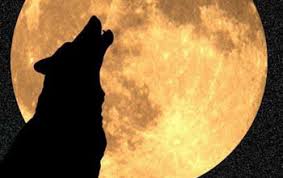
January's WOLF Full Moon


Wolf Moon (Photo: Courtesy NSF)


Look for the Wolf Moon, the first full moon of the year, on Monday, Jan. 17, 2022.

Full Moons have been given different names by Native Americans to help track the seasons of the year. There seem to be correlations between the names and what is occurring in nature at that time. According to the Northwest Trek Wildlife Park in Eatonville, WA, wolves “tend to howl more often in the winter months. It was thought the wolves howled due to their hunger; however, there’s no evidence for this.”

Lakota Wolf (Kagan)

Wolves are night hunters, and they most often call to mark territory, locate members of their pack, organize hunting and reinforce social bonds. The idea that they howl at the moon is most likely because they tilt their head back as they vocalize.

The Old Farmer's Almanac notes other interesting names assigned to the January full moon that also relate to cultural or natural events. Some names relate to weather such as “the harsh coldness of the season.” Cold Moon or Frost Exploding Moon from the Cree, and Severe Moon or Hard Moon, referring to the hard crust atop fallen snow, from the Dakota.

There is the Canada Goose Moon of the Tlingit; no doubt associated with the geese in their area. And, in approximately the middle of the winter season,  the Assiniboine people refer to it as the Center Moon.

Not just a North American custom, around the world full moons figure in cultural events. The Weather Channel shares that “Celebrated as the Moon after Yule, pre-Christian Europeans enjoyed a three-day winter solstice feast upon the arrival of this first Full Moon.” Also noted “… in India, [it] signifies the last day of the Hindu calendar celebration Shakambari Navratri festival honoring the goddess Shakambhari.”

We visited both Wolf Preserve of PA, in Littiz, PA, and the Lakota Wolf Preserve in Columbia, NJ. During our March visit to Lakota we heard quite a bit of howling during the day. 

#     #     #

SPECIAL Price reduction.

Interested in herbs?
 
Looking for Gardening Gifts?
 Check out the Herb Sampler on this Blog  

The Second Edition Herb Sampler (2019) is available through Amazon. Just click this link to find it.

Friday, January 14, 2022

Garden Plans and Moon Planting


Moon planters believe that the same gravitational force that affects the tides cause above ground crops to leap right out of the earth. And when on the wane with only a light pull and earth’s gravity the stronger, root crops dig deep in the ground.

As you look over your seed catalogs and begin planning your gardening season, check out moon planting and consider putting in a few plants to test if the lunar cycle affects their growth.


February’s full Snow Moon will appear on Wednesday, February 16, 2022. The February full moon is called the Snow Moon as February usually has the heaviest snowfall. Although Feb 16, according to the AstroSeek  lunar planting calendar, is a rest day, the following five days are for planting below ground root plants; however, maybe not in our Zone 6.


Look for the five days after the March 18 Worm Moon to plant beets, broccoli, cauliflower, and leafy greens. This is called the Worm Moon as it is near the beginning of spring and softer ground brings earthworms up and robins out.

Root Vegetables
(Photo: Alex Lomas, CC BY 2.0)


What About Moon Gardening and Planting?

Pick anytime through history and somebody is trying to figure out how the moon affects our planet. While some scoff at the idea and call it folklore, others swear by it and others say “why not?” I am nevertheless wary of anyone who cites their “grandpap” as an authority.


Cheri Melton, a Cochise County,  Arizona, Master Gardener, uses this method but provides no scientific back-up for the claims; however, she notes that it does add a rhythm to planting cycles and helps her pace her gardening.

Even further into astrological affects, some believe that the zodiac signs present when crops are planted can increase growth and production. There are air, water, fire, and earth signs, each with plus and minus properties.

Whether you believe the moon affects plant growth or not, it's still an interesting idea and helps promote annual almanac sales. Almanacs which, by the way, predict a “winter whopper” near the end of February this year.

(Because of the need for truth in media, please note that several extensive research reviews show no basis for the moon to impact plant growth.)

 #     #     #

SPECIAL Price reduction.

Interested in herbs?
 
Looking for Gardening Gifts?
 Check out the Herb Sampler on this Blog  

The Second Edition Herb Sampler (2019) is available through Amazon.


Saturday, March 27, 2021

FULL WORM MOON March 28, 2021


Illustration courtesy of The Old Farmers Almanac


The March 28 full moon is the WORM Moon. The Worm Moon is considered the last full moon of winter and is named after earthworm casts that appear as the ground thaws, NASA reported. It also signifies the time of year when earthworms and grubs come out of dormancy.

Here's some worm trivia from the University of Illinois Extension

* There are approximately 2,700 different kinds of earthworms.

One of these is an aggressive Asian earthworm is negatively impacting our gardens and ecosystem. They are JUMPING WORMS. Find out how to recognize this invasive species and help limit its spread at this Penn State link.  

* A worm has no arms, legs or eyes. Even though worms don’t have eyes, they can sense light, especially at their anterior (front end). They move away from light and will become paralyzed if exposed to light for too long (approximately one hour).

* Baby worms are not born. They hatch from cocoons smaller than a grain of rice.

* If a worm’s skin dries out, it will die.

* Worms are hermaphrodites. Each worm has both male and female organs.

* Worms mate by joining their clitella (swollen area near the head of a mature worm) and exchanging sperm. Then each worm forms an egg capsule in its clitellum.

* Worms can eat their weight each day.

* In one acre of land, there can be more than a million earthworms.

* The Australian Gippsland Earthworm grows to 12 feet long and can weigh 1-1/2 pounds.

Photo courtesy abc.net.au

**********

Are you interested herbs? Check out the Herb Sampler on this Blog  

The Second Edition Herb Sampler (2019) is available through Amazon.

I Write: What Carries Us

At our monthly Writing is Fun meetings we decide a prompt for writing for the next meeting. Length is set at 2 pages so we can read them at ...