Showing posts with label bulbs. Show all posts

Friday, September 2, 2022

Trick Bulbs Now for Winter Treats


Before you start sewing sequins on the princess costume or the "S" on Superman's chest in preparation for the chanting of "Trick or Treat," think about one or more winter treats for yourself because now is the time.

What treats? Beautiful blooms from bulbs which have been made to blossom. Winter is coming and enjoying a bright flower inside while it is gray, cold, and icy can bring forth a “Bah, humbug to you, Old Man Winter!”

While many know this process as forcing bulbs, Art Wolk, award-winning flower exhibitioner and author of books on this topic, likes to call it bulb enticing. Whatever term you use, it refers to making a plant bloom ahead of its natural schedule.
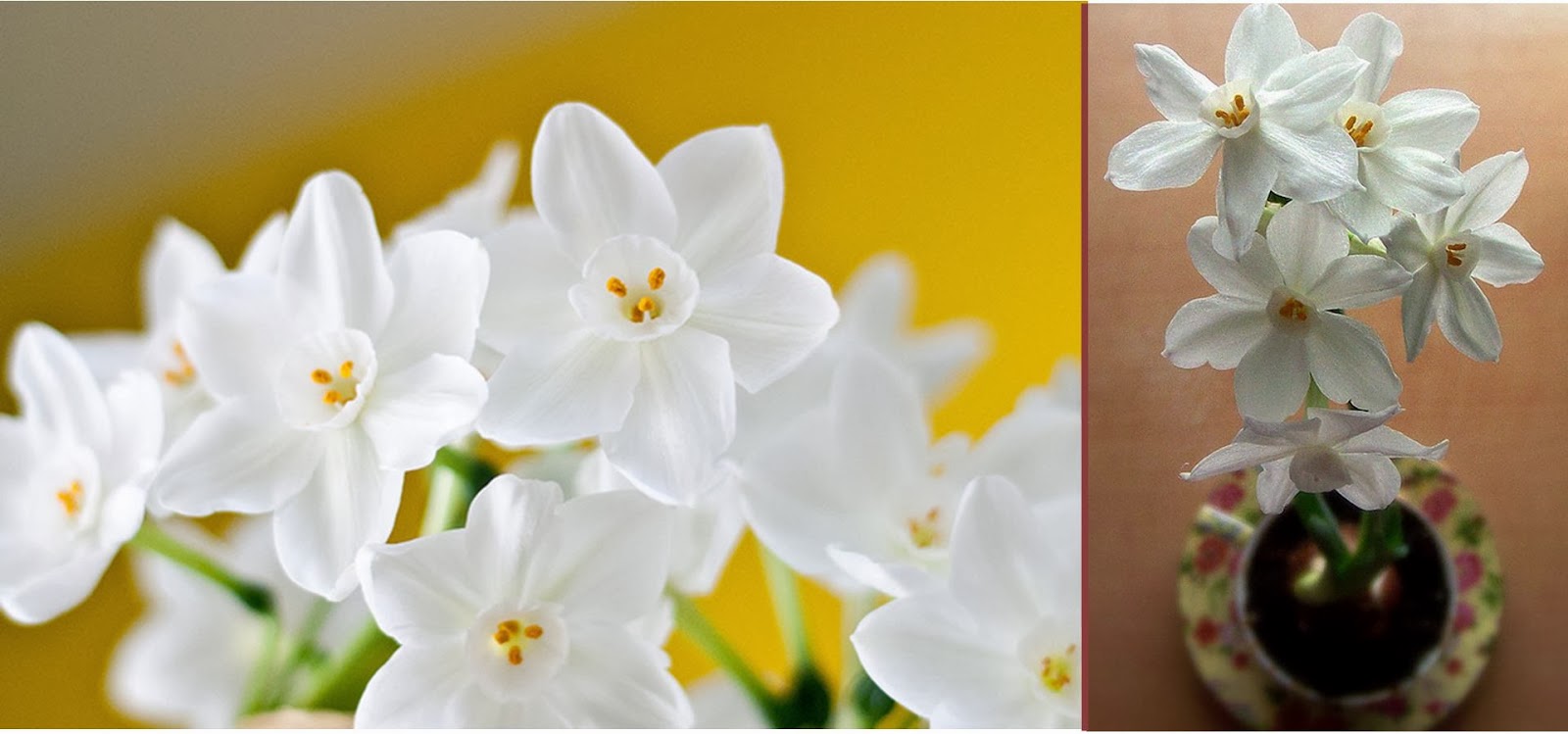
Paperwhite Narcissus (L: Clara S. & R: Debra B.)
What and When to Plant
Often for sale as kits this time of the year, paperwhite narcissus and amaryllis are the easiest for beginners. Dr. Robert Nuss, Penn State horticulturist, explains that these bulbs have been prepared for flowering before they are ready for sale.

Red Amaryllis (Univ. of Minnesota Extension Service)
Other spring-blooming bulbs such as crocus, tulips, daffodils, and iris are popular. Don’t overlook smaller bulbs such as snowdrops or grape hyacinths for a winter treat. A container-grouping of them is convenient for the breakfast table or corner of a desk. All these bulbs must have a cold period (35-48° F) of about three months to initiate bloom according to Kate DeSimone, Penn State Master Gardener.


Typically, bulbs you want to bloom during the end of year holidays are planted the last week in September; however, bulbs planted later will still bloom during the gray days of winter. Consider planting several batches several weeks apart for continual bloom in the future.


Pink Hyacinths (Tomy Lees)


So, if you want to see Dutch hyacinths in February, plant them around mid-November allowing 11 weeks to chill. Shoots should start to emerge the first week in February. The chart below shows the chill period for commonly grown bulbs.


Chill Chart (George Weigel)
How to Plant for Cool Storage

Bulbs can be grown in soil, a pebble filled bowl, or in water in a specially shaped bulb vase. To grow in soil, use a clean container with good drainage. Don’t use garden soil. Use a mix that drains well such as a mix of soil, sphagnum moss and perlite or commercial “soil-less mix.
Planting a pot (Iowa State Univ. Extension Service)

Fill the container three-quarters with the mix and sit the bulbs close to each other, root end down. If the bulbs have flat sides, turn these to the outside of the pot as that is where the largest leaf will come up. Add soil mix around the bulbs leaving the “noses” exposed. Water gently but thoroughly. Don’t let the soil dry out but don’t overwater.
 
If you are going to plant them in a pebble filled bowl (with water) or a bulb vase, you can pre-chill the bulbs in an open paper bag until roots begin to show. Then place them in the container and continue to chill for the remaining chill period, gently replacing the water every few days with lukewarm water. Check the Purdue Website for instructions on forcing bulbs in water.

Pebbles or glass vase with water (Purdue Ext. Serv.)

 Paperwhites have a tendency to flop over so you might want to put them in a tall glass container, clear to see the roots or fill with shells or other objects.

North Carolina State Extension Service (Michelle Pham)

 
Simone adds that bulbs may be chilled in any cold, dry location such as an unheated garage or crawlspace with temperatures around 40° F. If storing in the refrigerator, don't store in the same cooler as fruits or vegetables, which give off ethylene gas that can harm the flower inside the bulb. Some bulbs are poisonous, so don't put them in the refrigerator if you have small children.

Bring in the Blooms

When the chilling period is over, gently remove a bulb to check its growth. When you see roots and about 2 inches of shoot growth, the pots are ready to bring into the light.
Bring the pots into a cool location (55-65° F) with good sunlight. Keep the soil moist and turn the pots slightly each day to get uniform growth. Flowers should bloom within 2-3 weeks. To extend the blooms, keep them away from heat sources and move them to a cool area at the end of the day, bringing out for display in the morning.

Amaryllis (La Fattina)

Enjoy the treat of spring color during the dreary days of winter as you read through your garden catalogues. When the bloom is over, bulbs are usually discarded since forcing uses up their energy reserves so use their inspiration when planning the spring garden.

~ Carol Kagan, Master Gardener
#     #     #
Interested in herbs? Looking for Gardening Gifts?

 Check out the Herb Sampler on this Blog  

SPECIAL Price reduction.

The Second Edition Herb Sampler (2019) is available through Amazon. 

Just click this link to find it.

Sunday, October 10, 2021

Plan Now for Spring Color

From Franklin County, PA Master Gardener Facebook Notes

It’s hard to imagine next spring but try to remember the one earlier this year. Arching forsythia branches covered with yellow flowers, full blooms of mountain laurel, chenille-like branches of flowers on the red bud trees and sweet smelling lilacs. But the first blooms foretelling spring are the blooms of bulbs - tiny snowdrops (Galanthus) and the bright yellows and purples of snow crocus (Crocus chrysanthus) here and there.

It’s time to plan your spring colors and the best bets for bright colors and interesting shapes are bulbs. Planted in the fall they will burst into color just when winter is beginning to fade.

Optimum planting time for spring flowers falls between Sept. 15 and Nov. 30 in Pennsylvania. "It’s easy to plant spring flowers, and …they last for years,” said Jim Sellmer, professor of horticulture in Penn State’s College of Agricultural Sciences. As long as the ground is still soft enough to dig in, bulbs can be planted anytime in the fall.

Look over your garden and landscape for areas that will be bare in spring or areas that can use a pop of color. Don’t overlook shady areas in the fall. Once the leaves are off the trees they may be a sunny space in the spring. Remember that once the blooms have faded the foliage will still be standing. Select a spot where mid- to late spring plants can camouflage the foliage as it begins to fade.

Snow crocus (Crocus chrysanthus)
As always, consider whether you will need a soil test for areas where you are going to plant. Your county Extension Office can provide a soil test kit. Robert Berghage, associate professor of horticulture in Penn State’s College of Agricultural Sciences, provided information about soil needs for bulbs in a November 2000 article.

He noted that bulbs “need good drainage and a high amount of organic matter, so if your soil is mostly sand or clay, mix in peat moss or compost until organic matter is about 25 percent of volume.”

Both Sellmer and Berghage suggest using hardware cloth (chicken wire) when planting if rodents such as chipmunks and squirrels are a problem. You can surround the bulbs with a cage or spread the wire over the top of the soil and cover with mulch.

Spring-flowering bulbs are available from garden centers and catalogs from August to October. "They're easy to plant and live for years," said Berghage. "Best of all, they start brightening the landscape while it's still late winter."

The flowers of bulbs with their wide variety of bloom times can provide a continuous show of color from February through early summer. Early bloomers are Galanthus, or snow drops, which show up in late January. A variety of crocuses start to appear in February and include large flowered Dutch crocuses which can be seen with the star-shaped Glory of the Snow (Chionodoxa) and the deep blue flowered Squill (Scilla).

In March and April look for Grecian windflowers (Anemone blanda) which look a bit like asters and come in purple, pink or white colors. A wide swath of grape hyacinth (Muscari) in dark or light blue colors can resemble a small streamlet and can highlight along a pathway or down a sloped area. Another favorite is Dwarf Iris (Iris reticulate), a 4-6” tall plant that blooms in early spring. Consider planting Narcissus 'Tete-a-Tete" (Cyclamineus daffodil) dwarf daffodils, too.

Tete-a-Tete daffodils


There are many different types of tulips available from tall to short, fringed and cupped, peony-flowering and double-flowering. They are available in almost every color you can image, even striped. Although called a Checkered Tulip the Fritillaria meleagris is a most unusual flower with checkered petals.

Once the flowers bloom, Sellner notes, “It is important to let the foliage die completely before you remove it so that it can gather nutrients for growth during the next season.” He notes that once they have been planted correctly they don’t require much attention.

Photos: Carol Kagan

~ Carol Kagan, Franklin County Master Gardener

**********

Are you interested herbs? Check out the Herb Sampler on this Blog  

The Second Edition Herb Sampler (2019) is available through Amazon.


I Write: What Carries Us

At our monthly Writing is Fun meetings we decide a prompt for writing for the next meeting. Length is set at 2 pages so we can read them at ...